
Segesta. The Temple Without a City
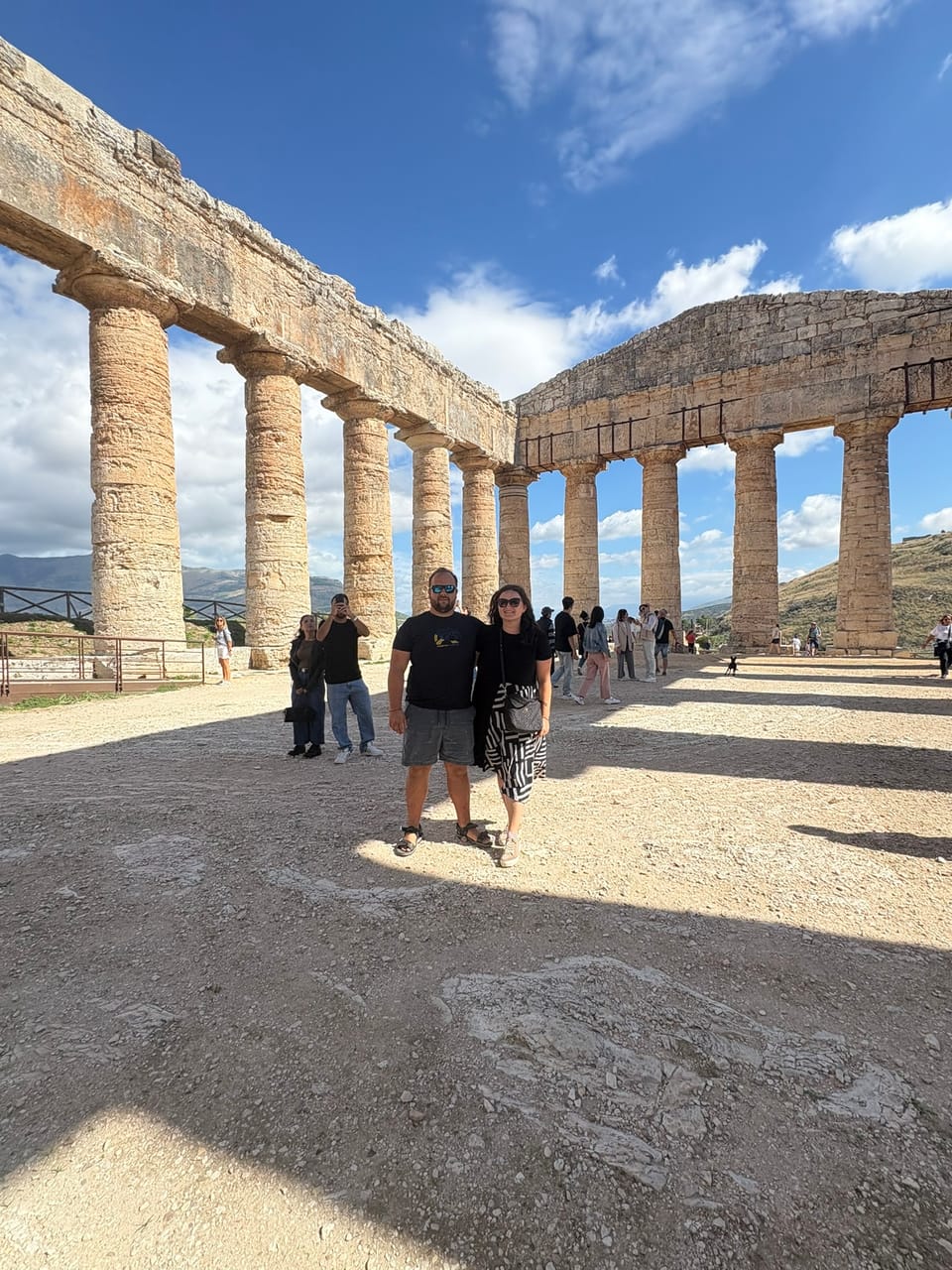
Segesta is one of those places where the first question isn’t what is this, but why is it here.
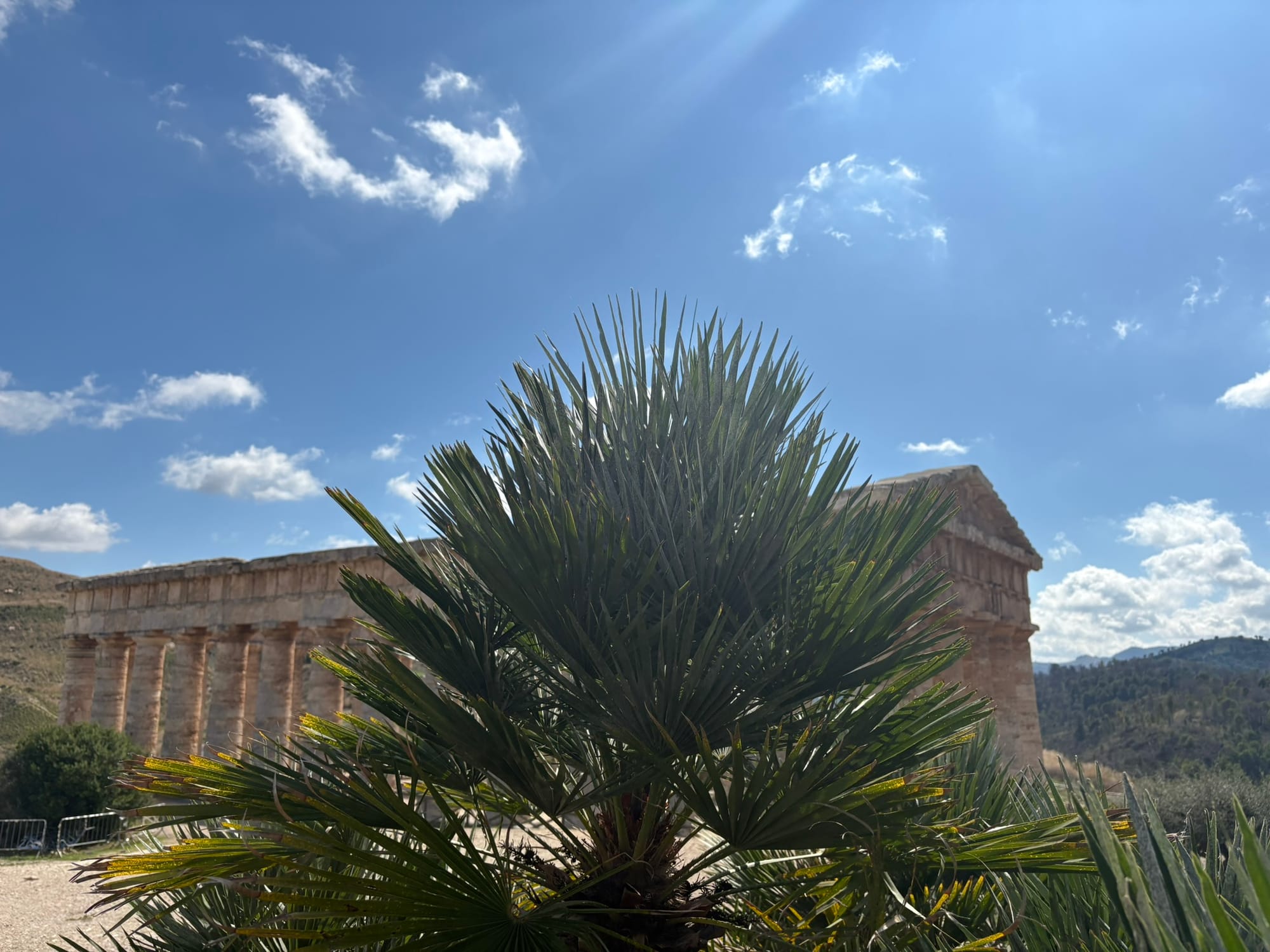
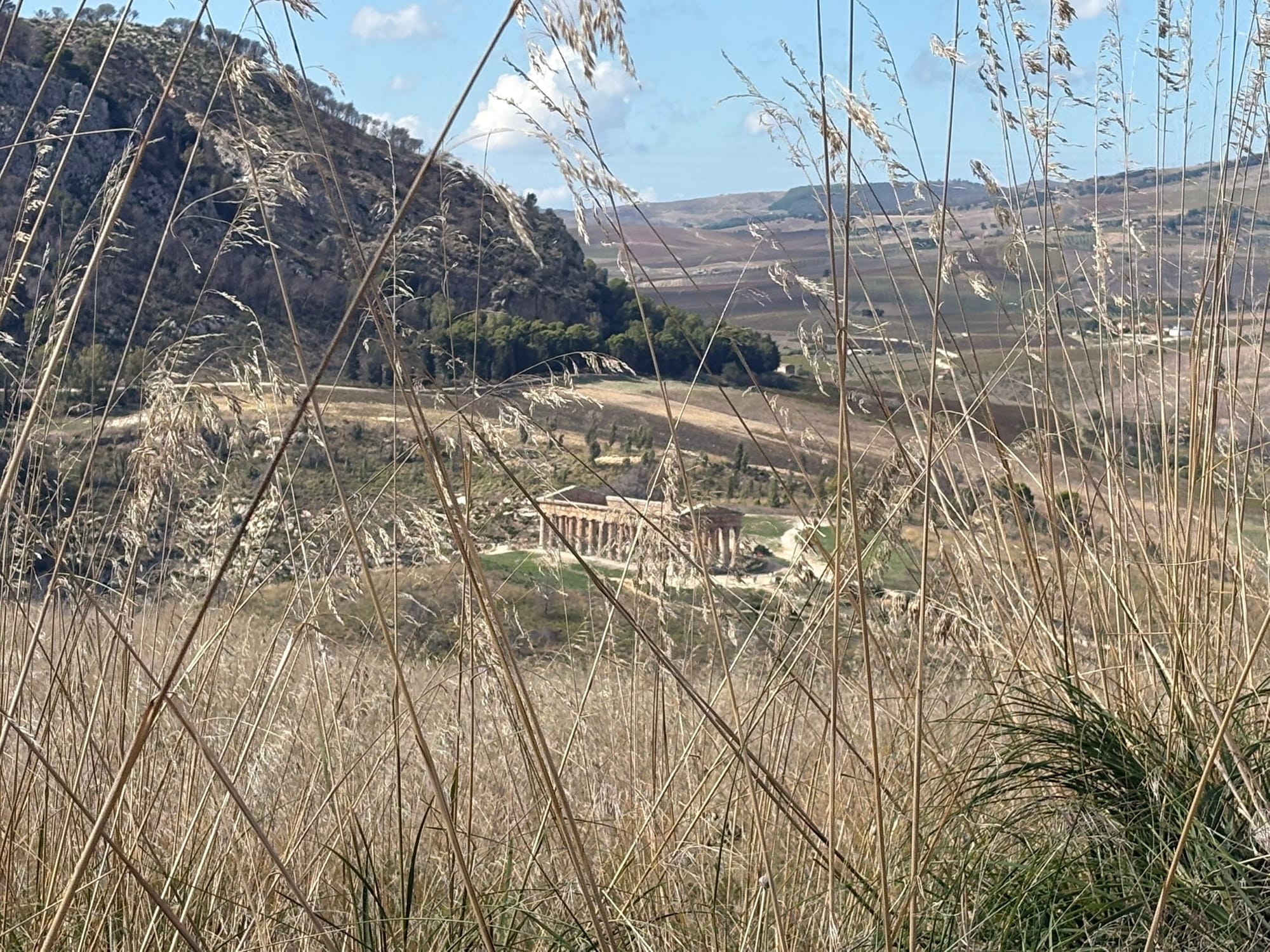
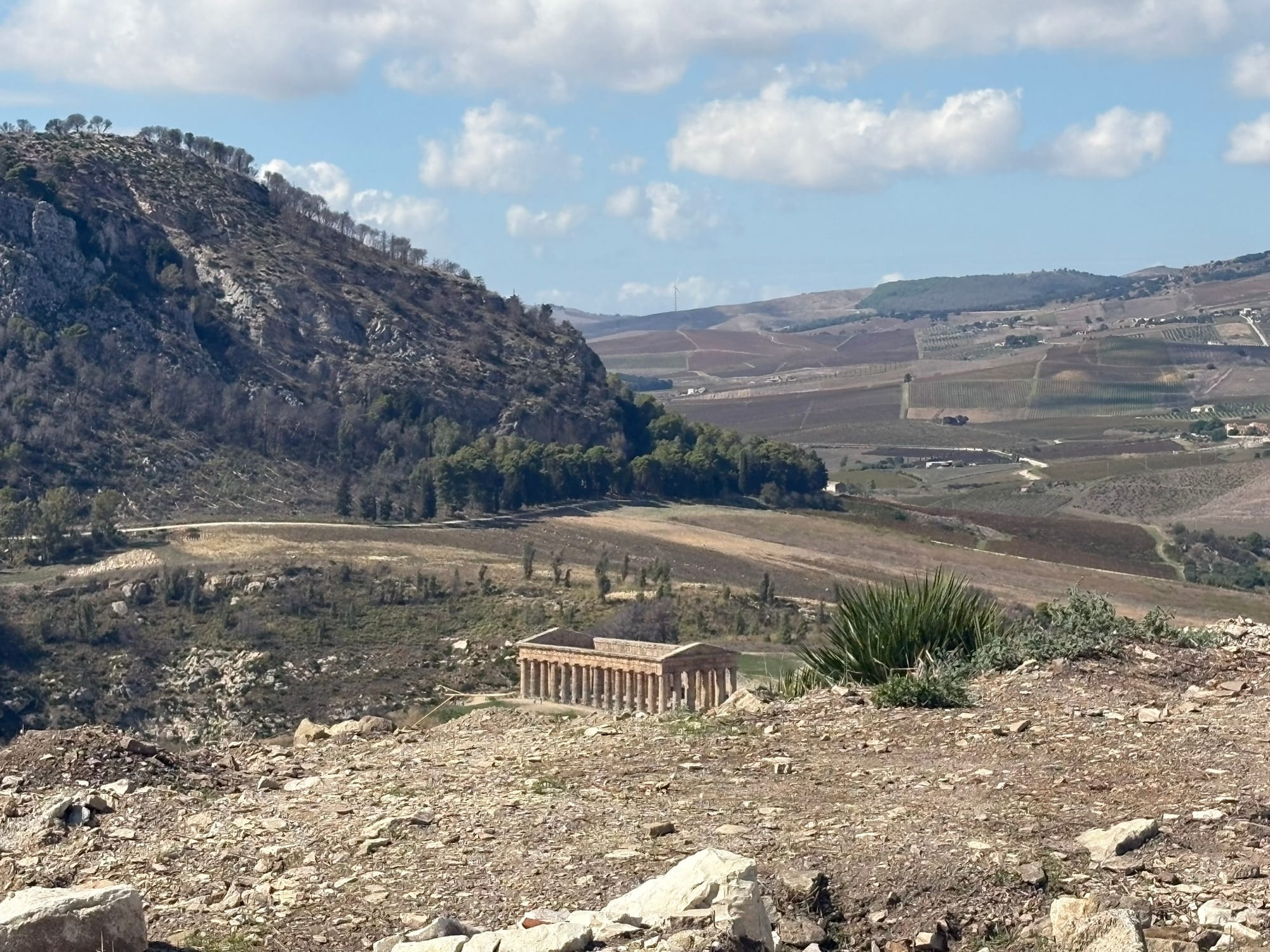
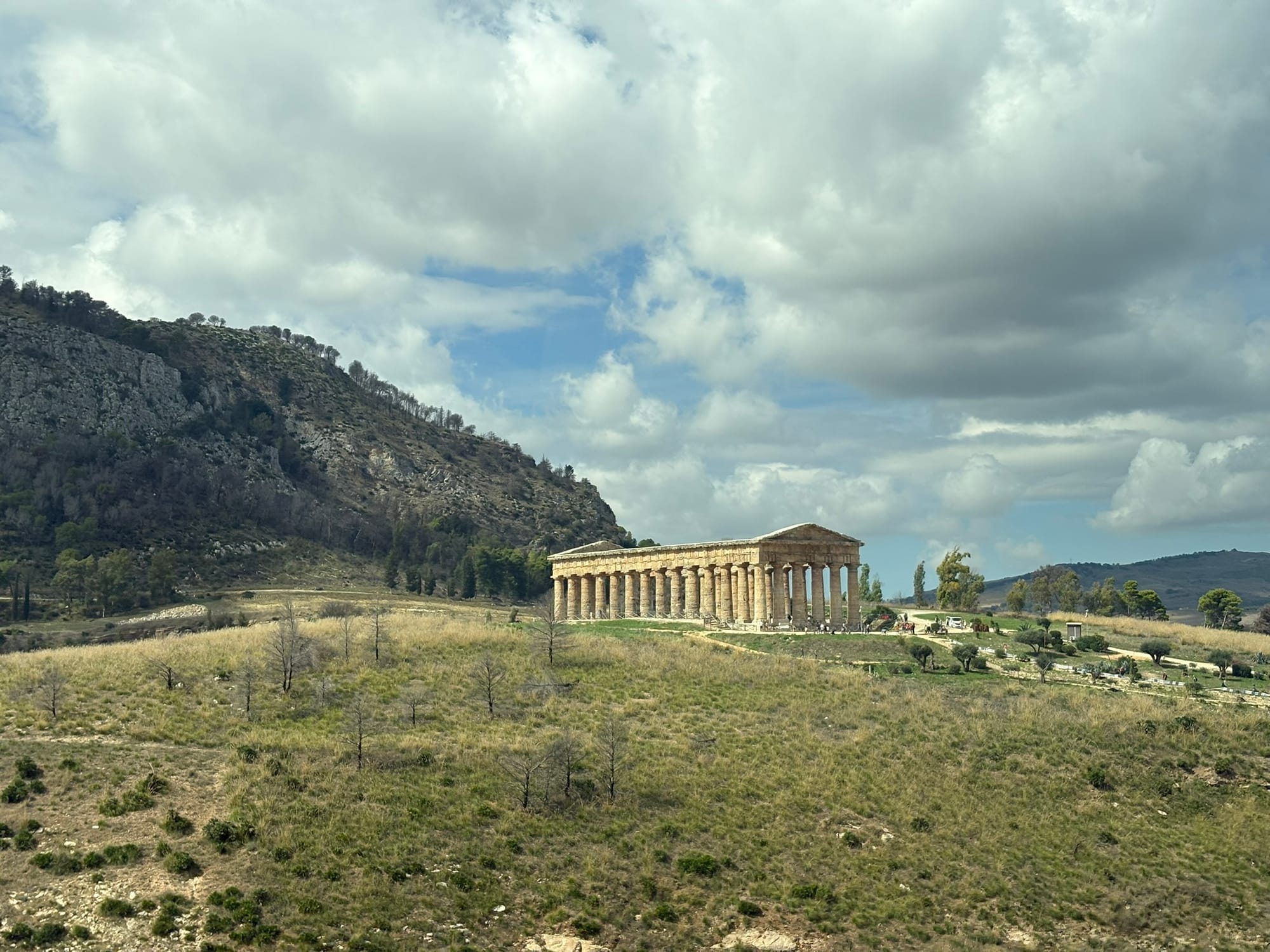
A large ancient temple standing in open hills, surrounded only by farmland and wide sky. No city around it. No dense cluster of ruins. Just one structure, placed with intention and holding its ground.
The site of Segesta does get busy during the tourism season. Visitors, groups, buses arriving and leaving. This is not a hidden gem or forgotten site. However, it is well worth the visit.
Even when there are people around, the place doesn’t feel tight or overwhelming.
The space absorbs it. The hills stretch far enough that noise dissolves quickly. You can step a little aside and suddenly it’s just you, the and the stone.
The temple doesn’t compete for attention. It lets you approach it at your own pace.
Segesta was not a Greek city
It belonged to the Elymians, an indigenous people of western Sicily who lived alongside Greek colonies, but were politically separate from them. When they built this temple, they chose a Greek Doric style not because they were Greeks, but because Greek architecture symbolized power, legitimacy, and cultural belonging in the ancient Mediterranean world.
The location was also deliberate. Historians believe the temple was placed here so it would be highly visible from a distance. From roads, valleys, and surrounding territories. It wasn’t meant to be hidden inside a city or surrounded by daily life.
This was a statement.
A way of saying: we are here, we are strong, and we belong in this land.
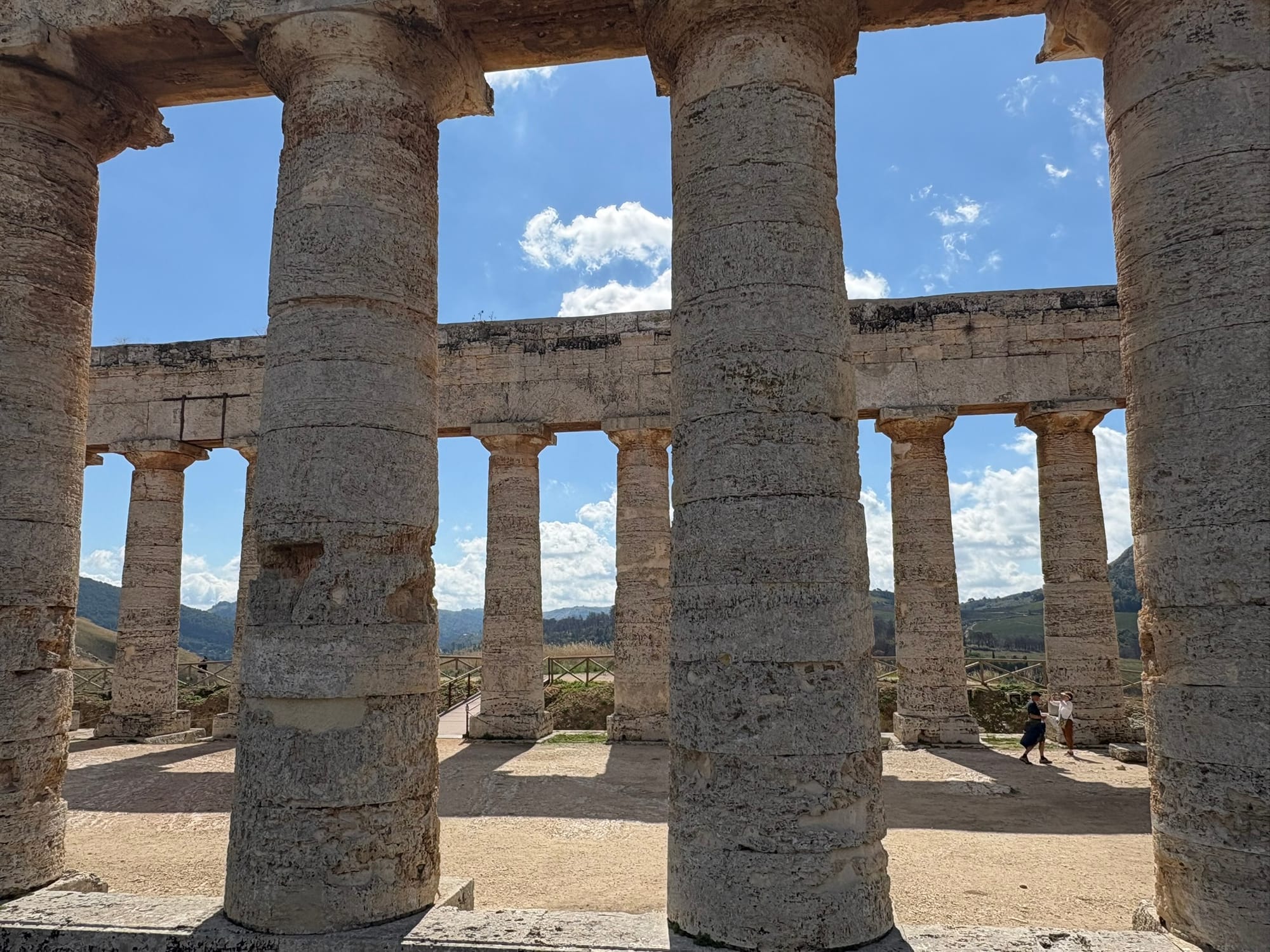
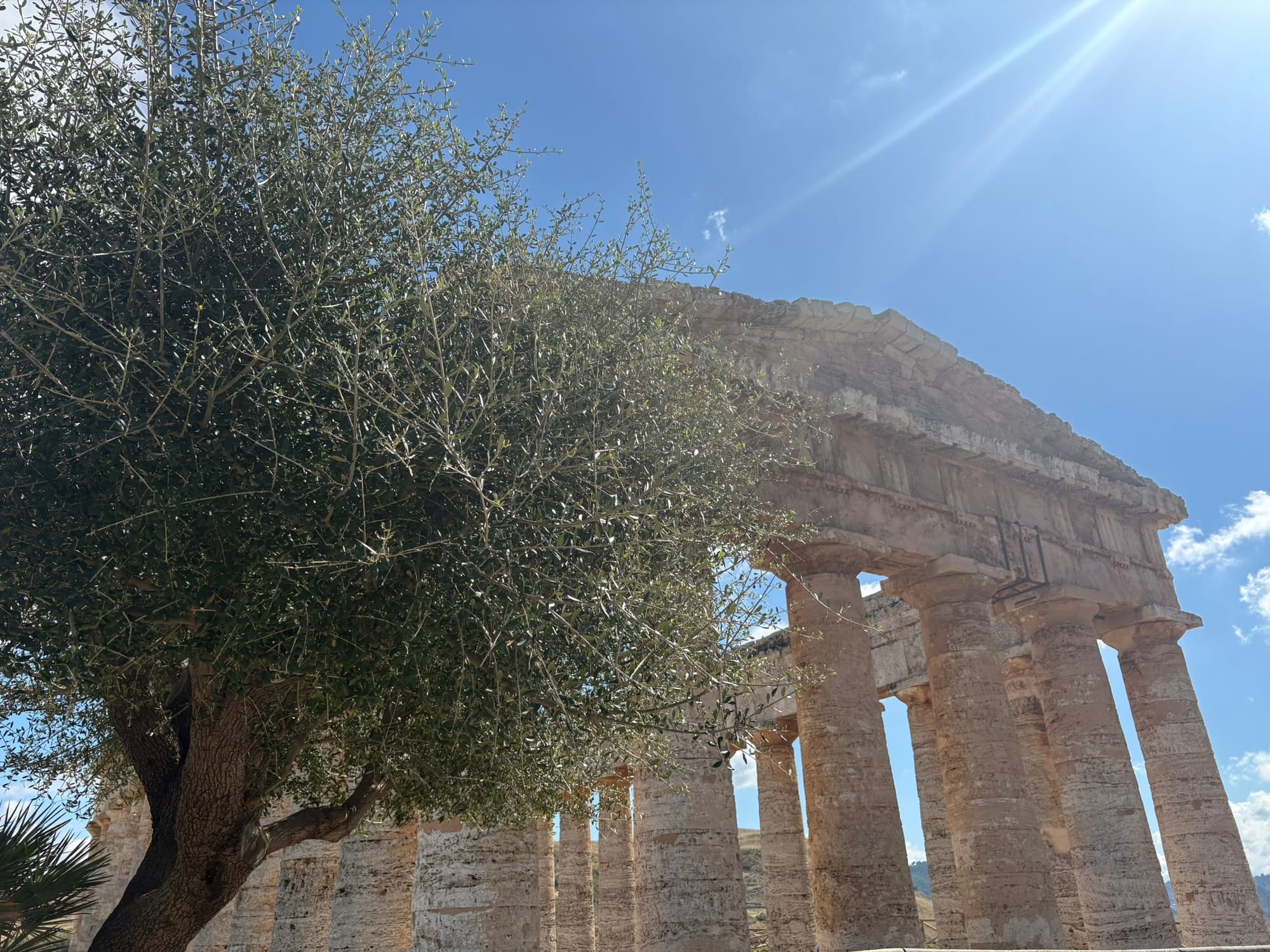
The temple itself was never completed. There was no roof. No inner chamber. No altar. The columns were never fluted, and you can still see the lifting marks left in the stone. Construction likely stopped because of political instability and ongoing conflicts in the region. Finishing a monumental building became less important than survival.
What remains today is not a ruin in the usual sense, but a structure paused in time.
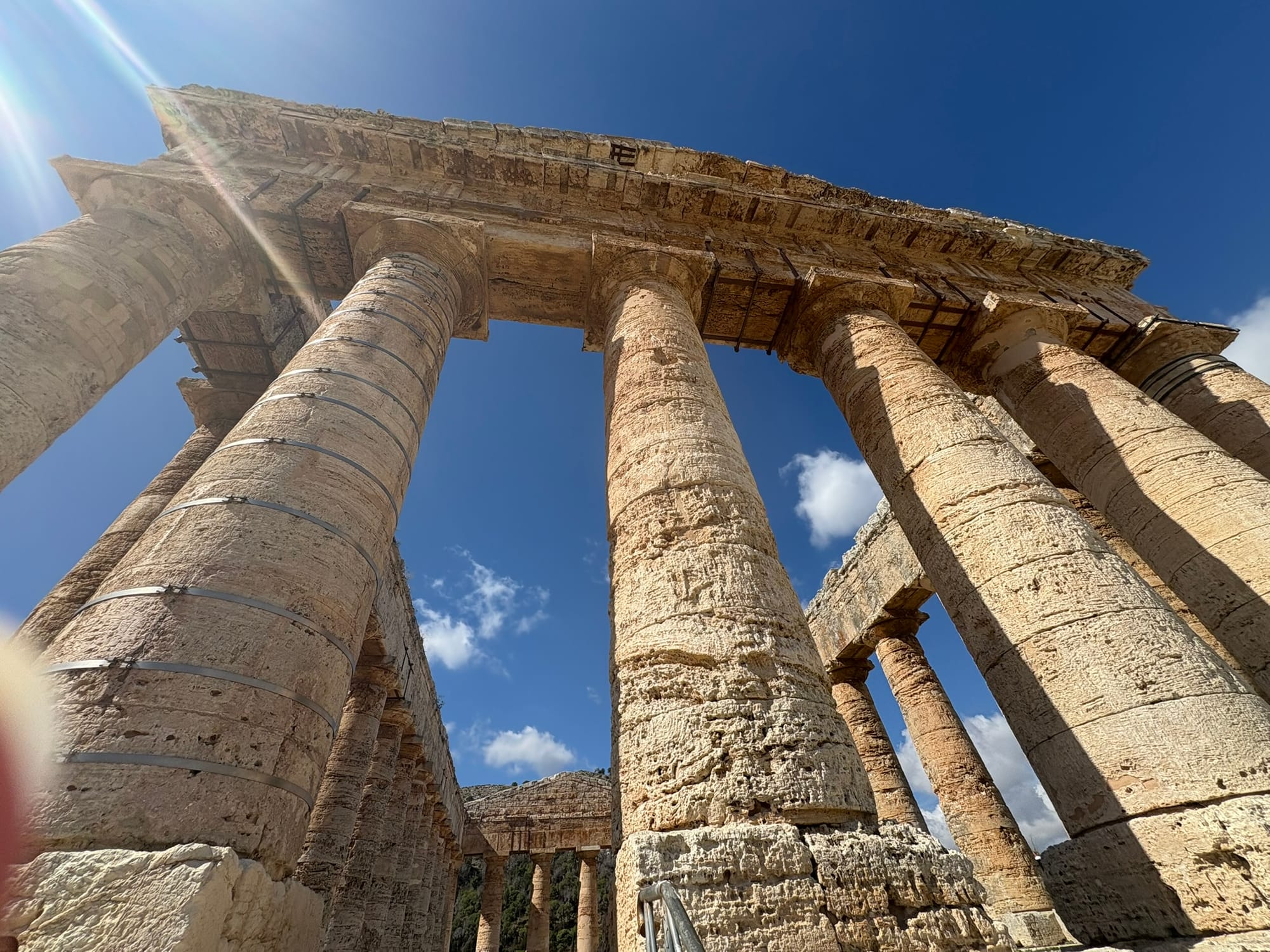
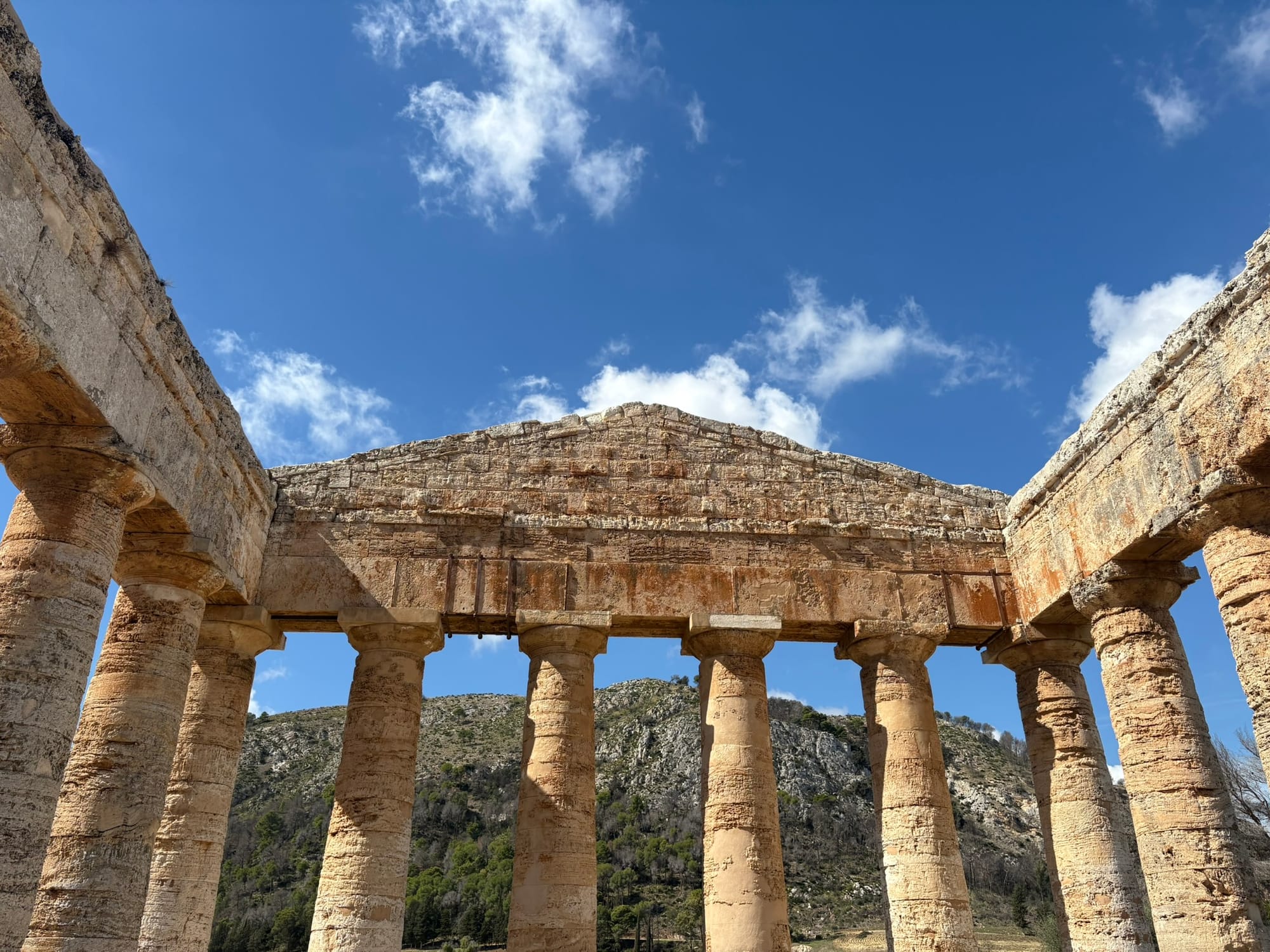
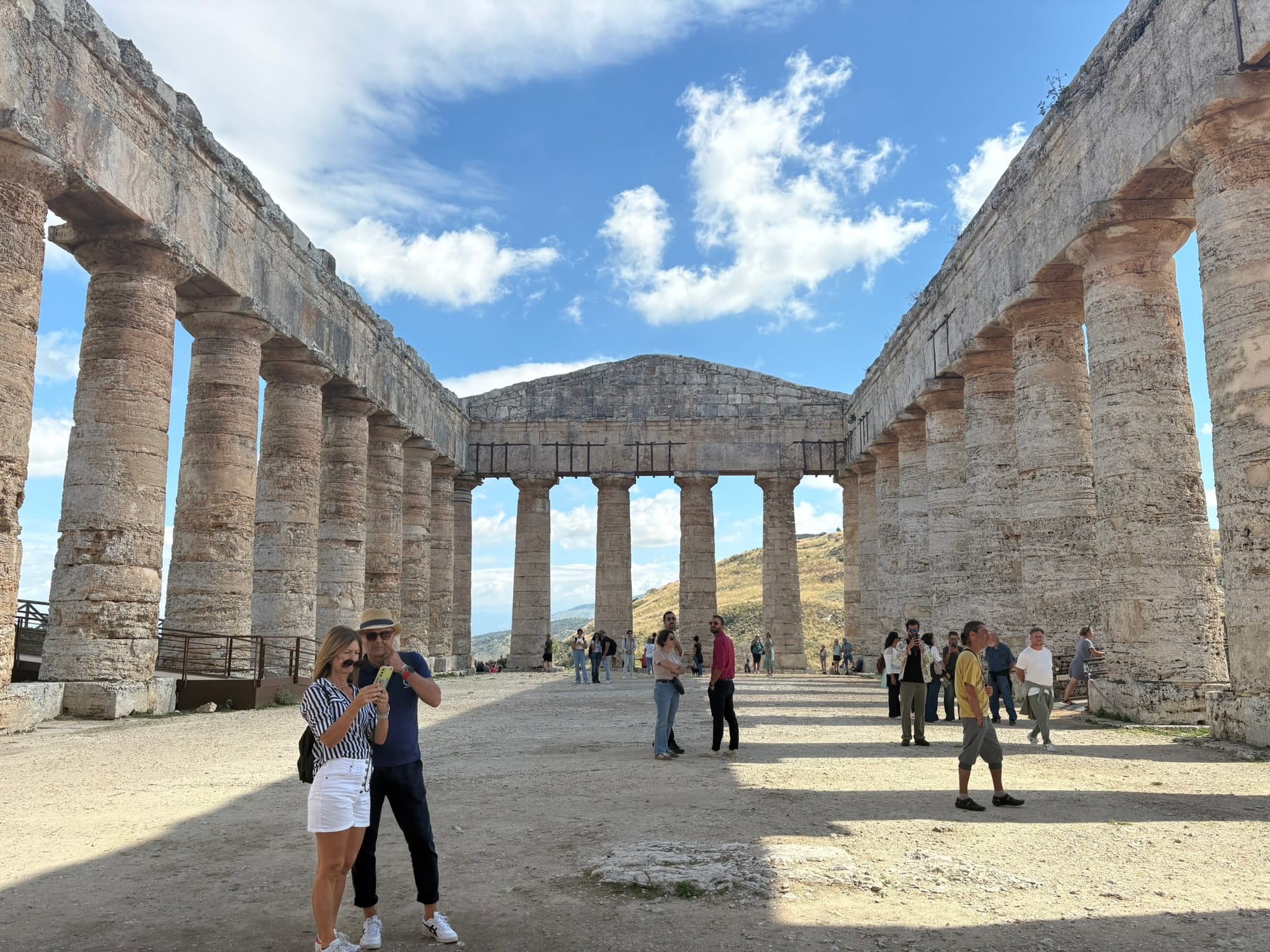
The temple experience
The temple sits on lower ground and is easy to reach once you enter the park.
You can walk all the way around it, take your time, and notice how its presence changes depending on where you stand. From one angle it feels massive and dominant. From another, it blends gently into the hills.
Its unfinished state doesn’t make it feel incomplete. If anything, it makes it feel honest. Nothing here feels staged. Nothing feels restored beyond recognition.
Just stones, space, and a lot of silence between them.
The amphitheater above
Above the temple, on higher ground, sits the ancient amphitheater. This is the part of Segesta that requires effort.
You can walk uphill, which takes around 30 minutes, or you can take the shuttle bus that runs from the park entrance up to the theatre. The shuttle is not too expensive (roughly €2.50 one way or €5 return) and is especially helpful in warmer months.
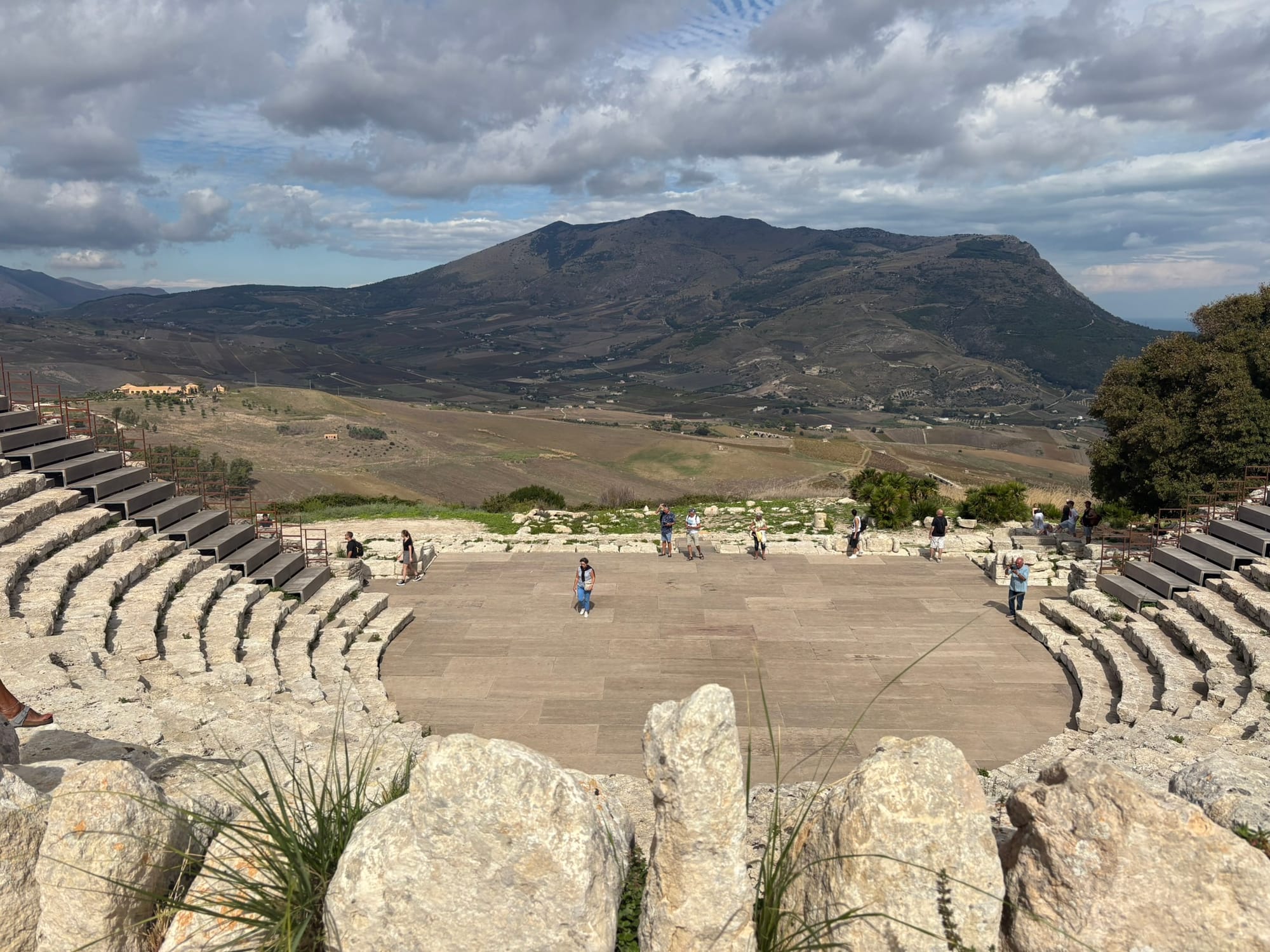
The amphitheater was built later, during the Hellenistic period, when Segesta came under Greek influence. Its position wasn’t random. Ancient theaters were designed to work with the natural landscape, and this one was carved directly into the hills.
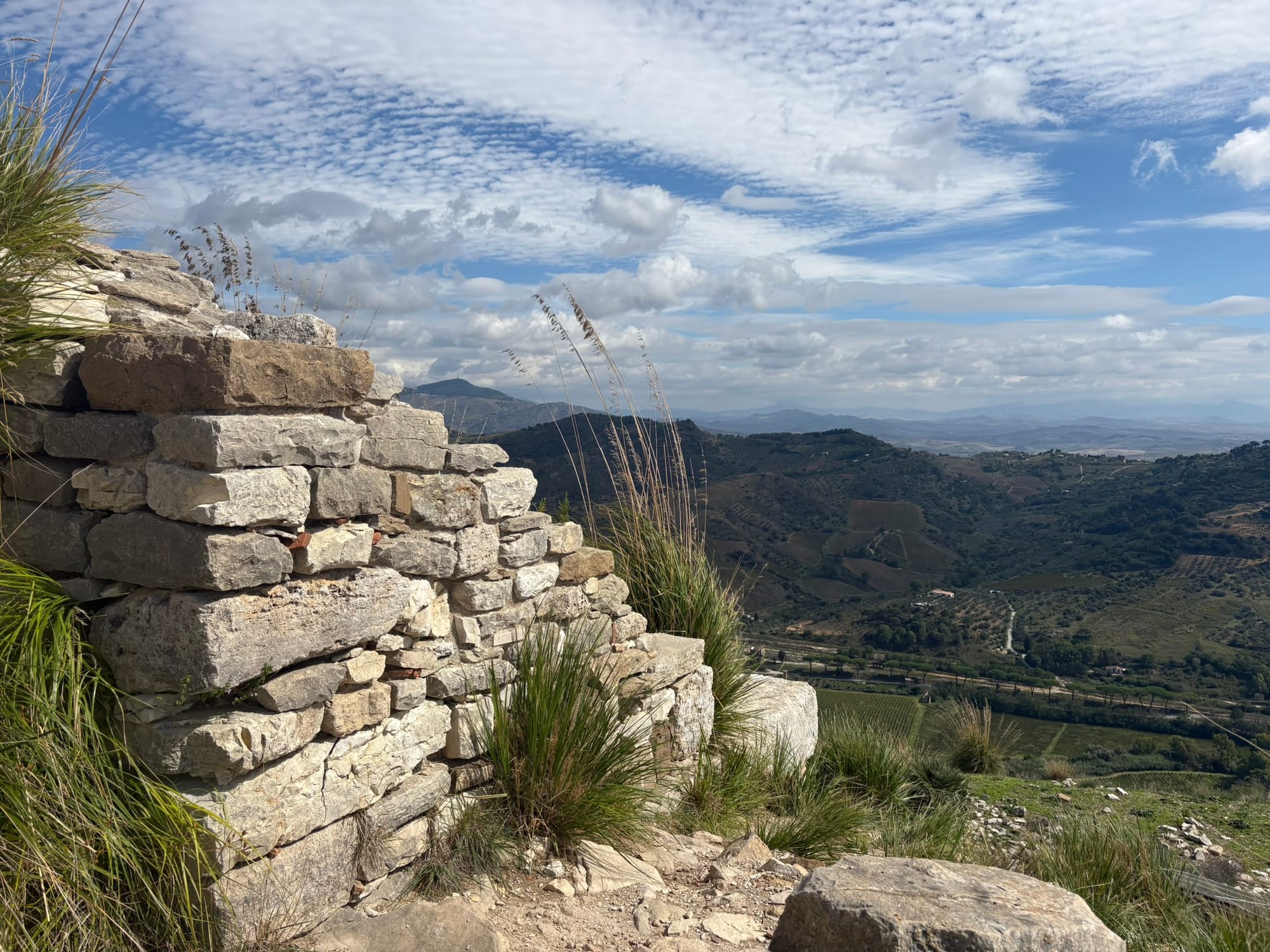
From the seating area, the view opens completely.
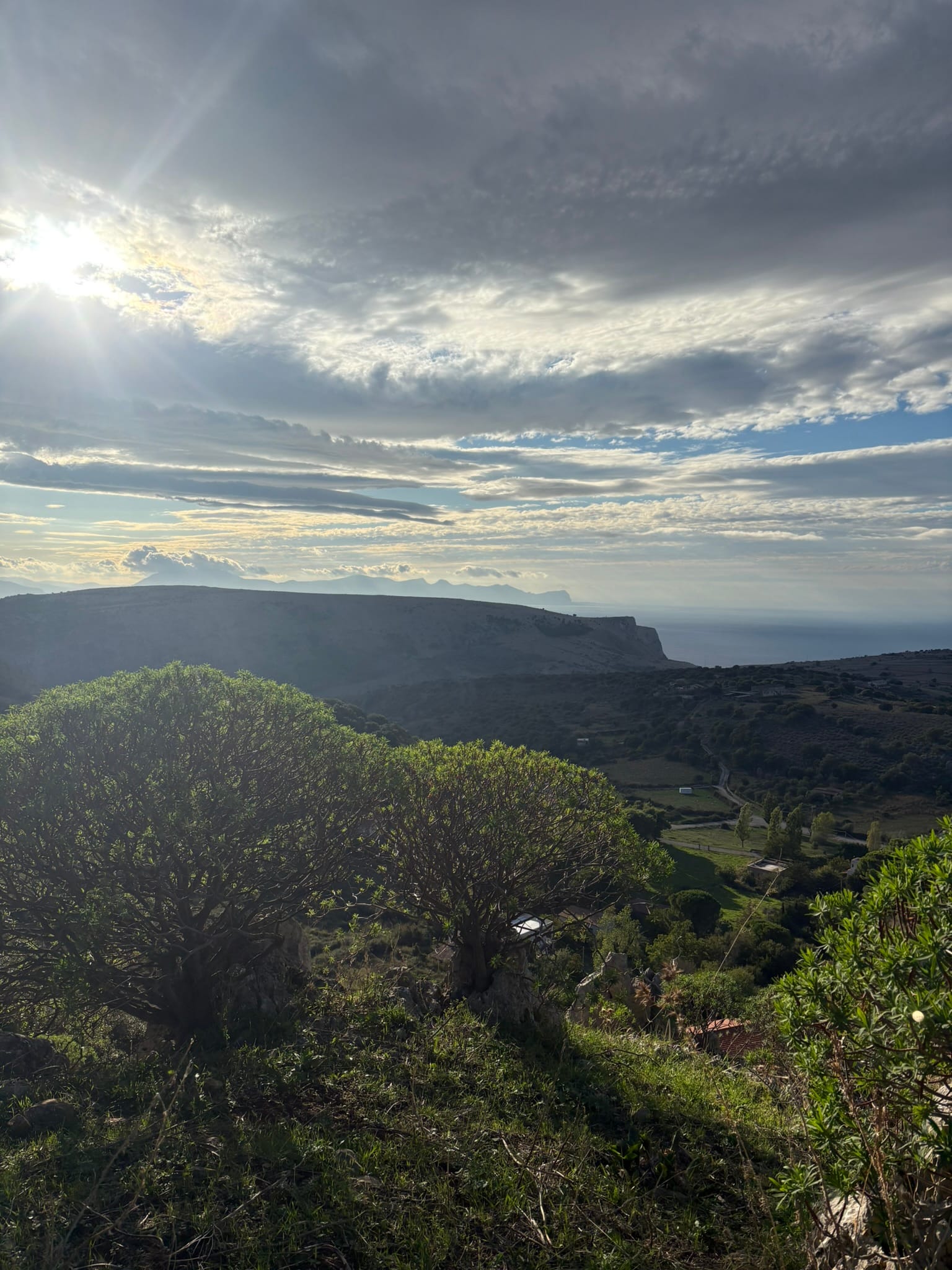
You see beautiful landscape and mountains. Performances held here would have taken place with the countryside as a backdrop, not a city.
It’s worth taking the time to walk around the area, even if you don’t stay long. The perspective it gives you of both, the surroundings and the temple, changes how you understand the site as a whole.
Practical notes before you go
If you choose to walk uphill to the amphitheater, plan accordingly.
In cooler months, the walk is manageable and even enjoyable. In summer, there is very little shade, and the heat can be intense. Bring water, wear proper shoes, and don’t rush.
Segesta isn’t a place to speed through anyway.
The aftertaste of Segesta
Segesta isn’t about rushing in for an “I was here” photo, then moving on with a list of dates in your head.
It’s about placement. About distance. About a structure that was meant to be seen and not surrounded.
A temple without a city. A theater with nothing but landscape behind it.
You don’t leave with the feeling that you’ve consumed something. You leave with the sense that you were briefly allowed into a space that has been standing quietly for centuries.
And that feeling lingers longer than you expect.
If you’re curious what Segesta feels like in real time, our YouTube video shows it better than words can. You can watch it here: https://youtu.be/sj8npc3qbvs?si=AjNQ30ymXh59HBpO
If you enjoy our stories, consider subscribing to our blog. It really helps us in these early stages.
Tips are never expected, but always appreciated. https://spark-of-sicily.ghost.io/#/portal/support
Thank you for reading and see you in the next one.
Ciao!
Member discussion